 Italiano
My didgeridoos
Each of my instruments has a name and a story. Two are middle and deep didgeridoos built especially for me, two are long-time travelling companions. You will find them all here, with photos and, where there is one, a track to hear them on.
Siluro
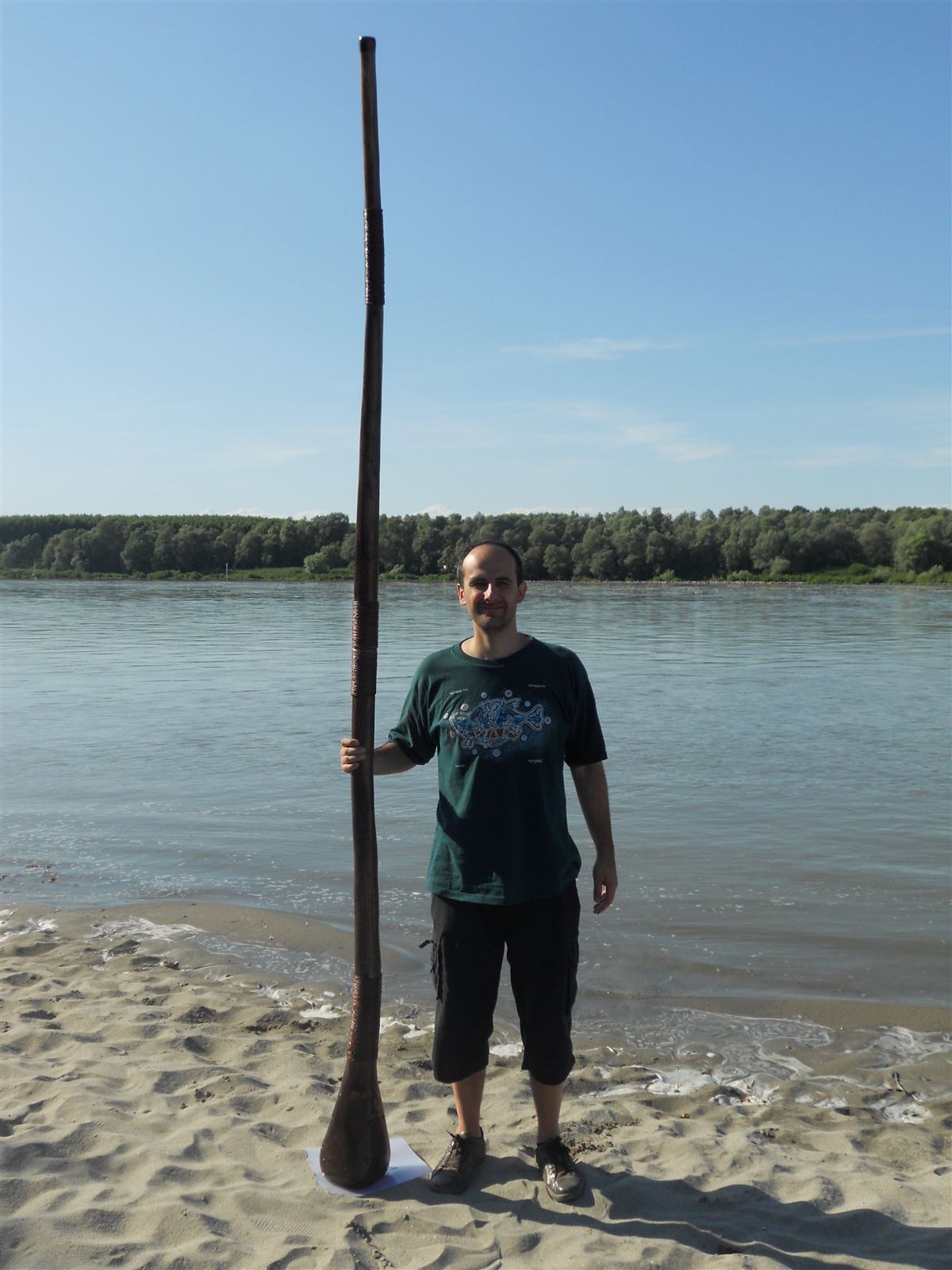
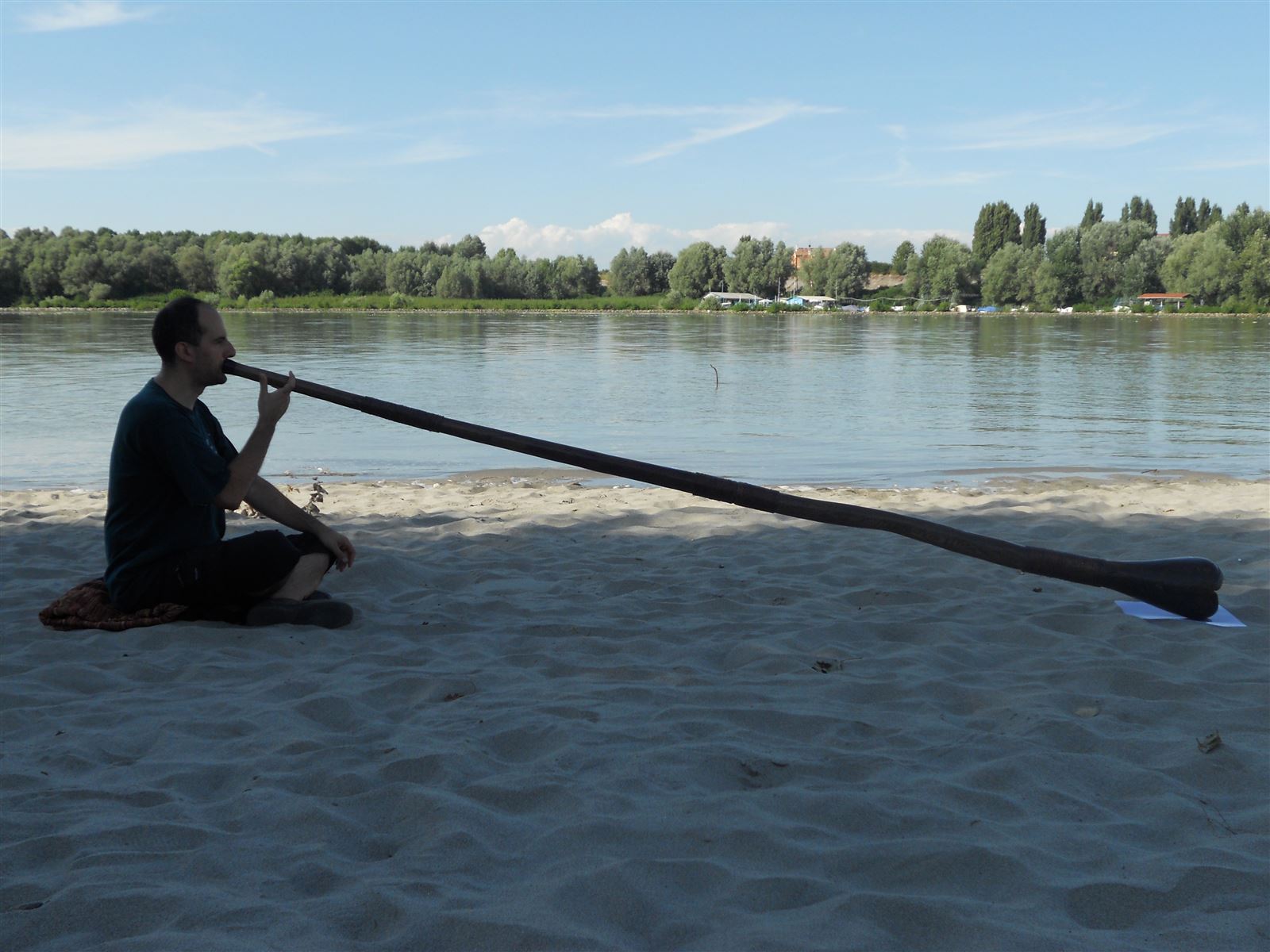
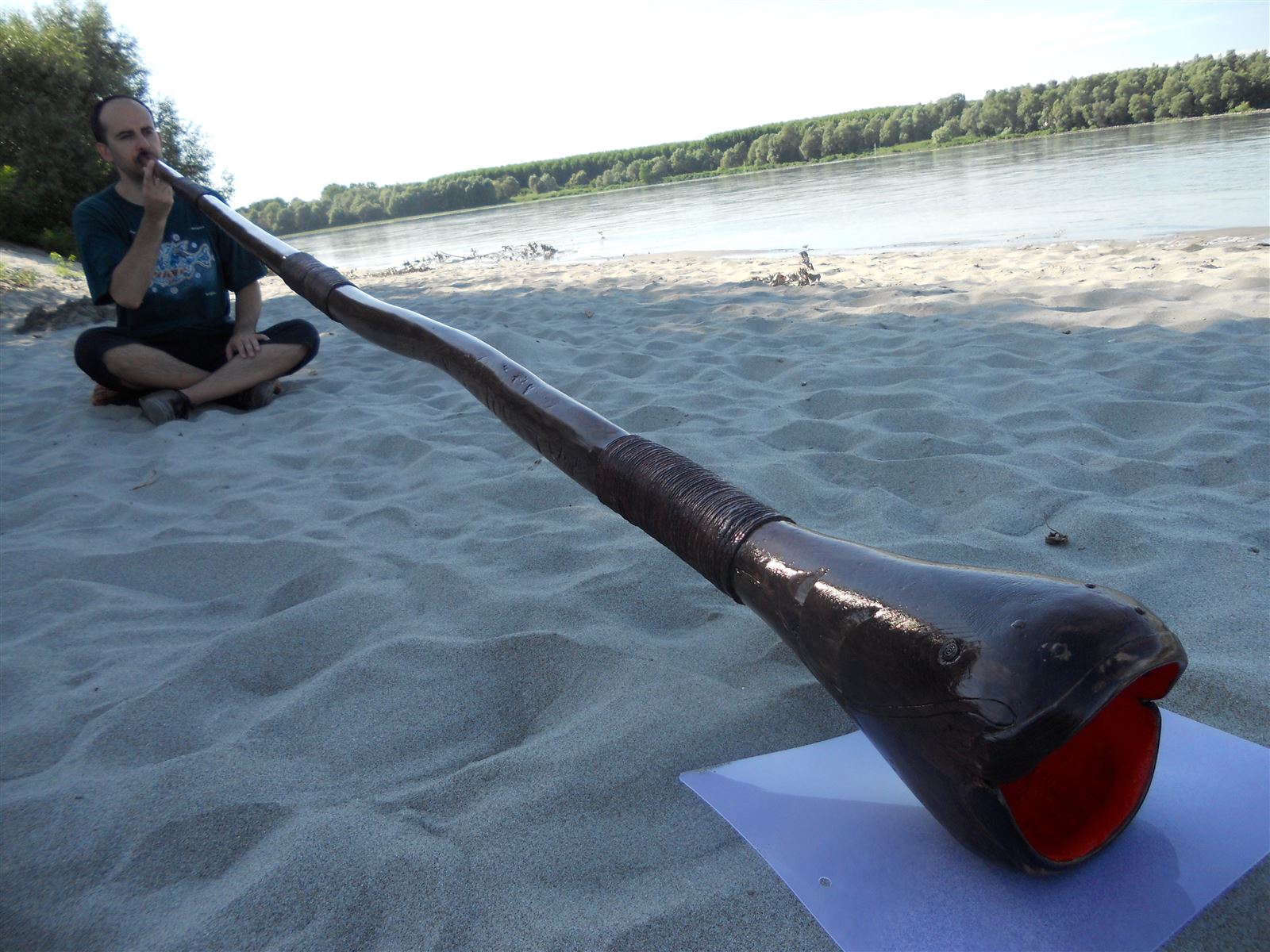
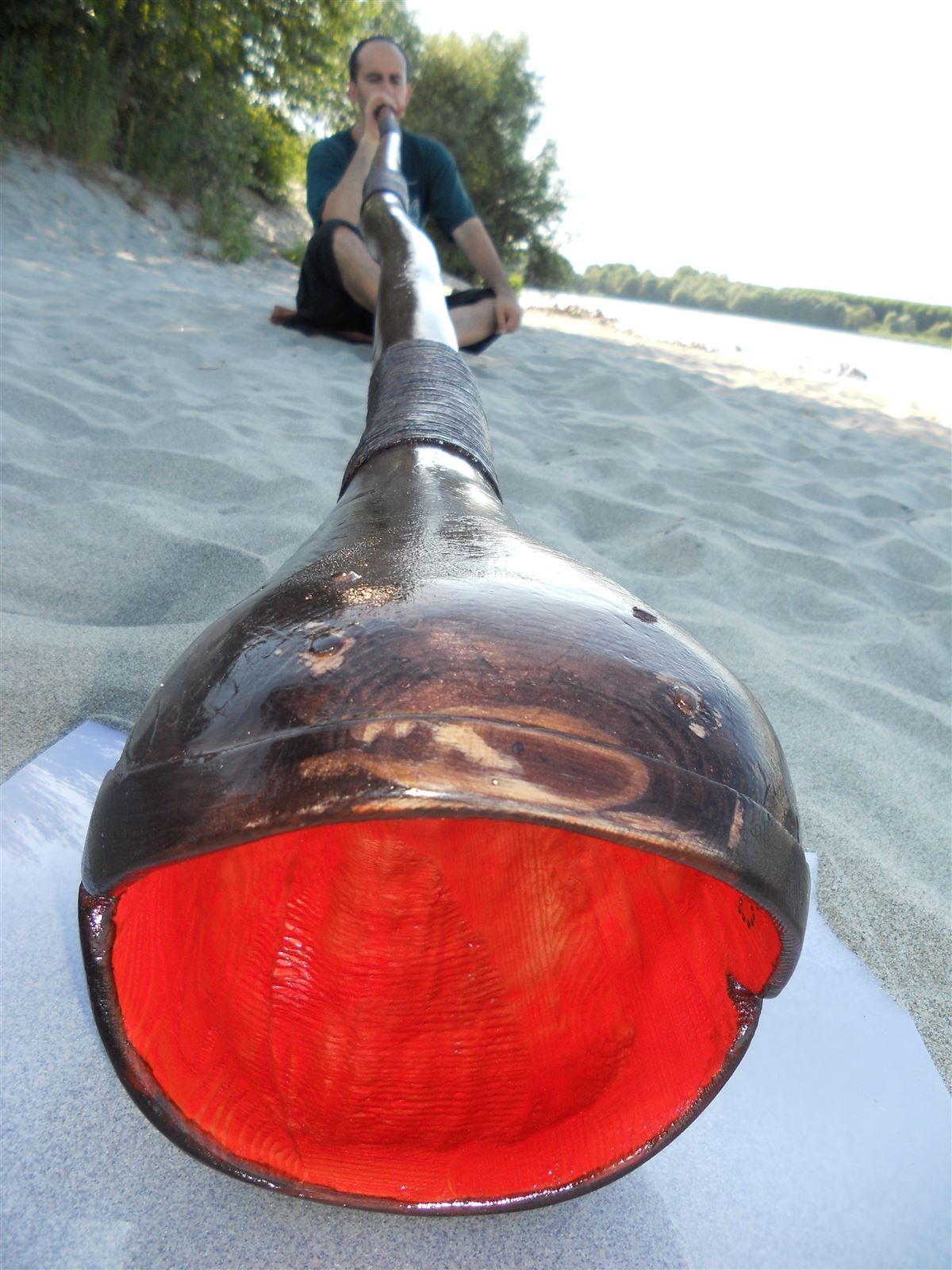
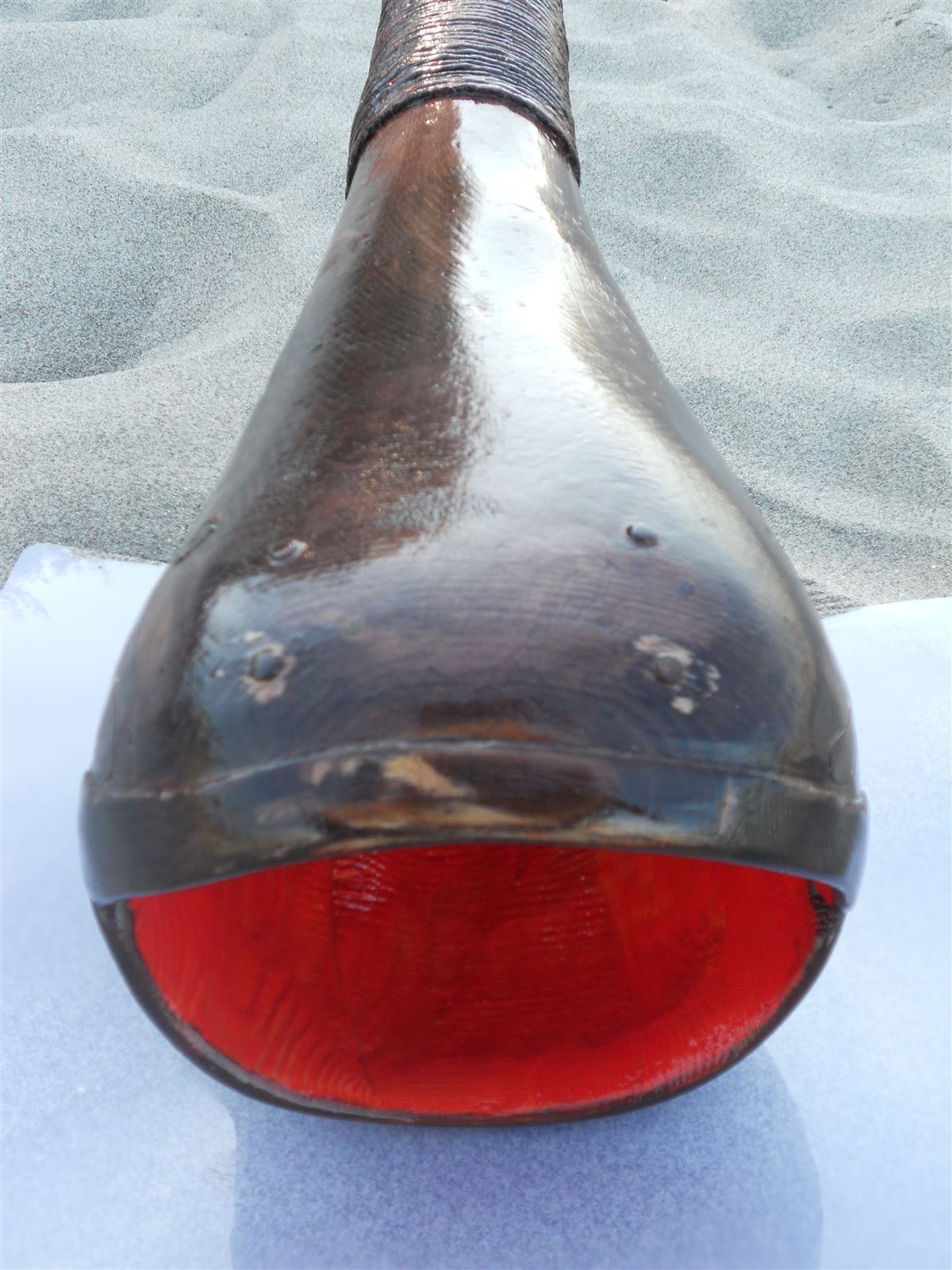
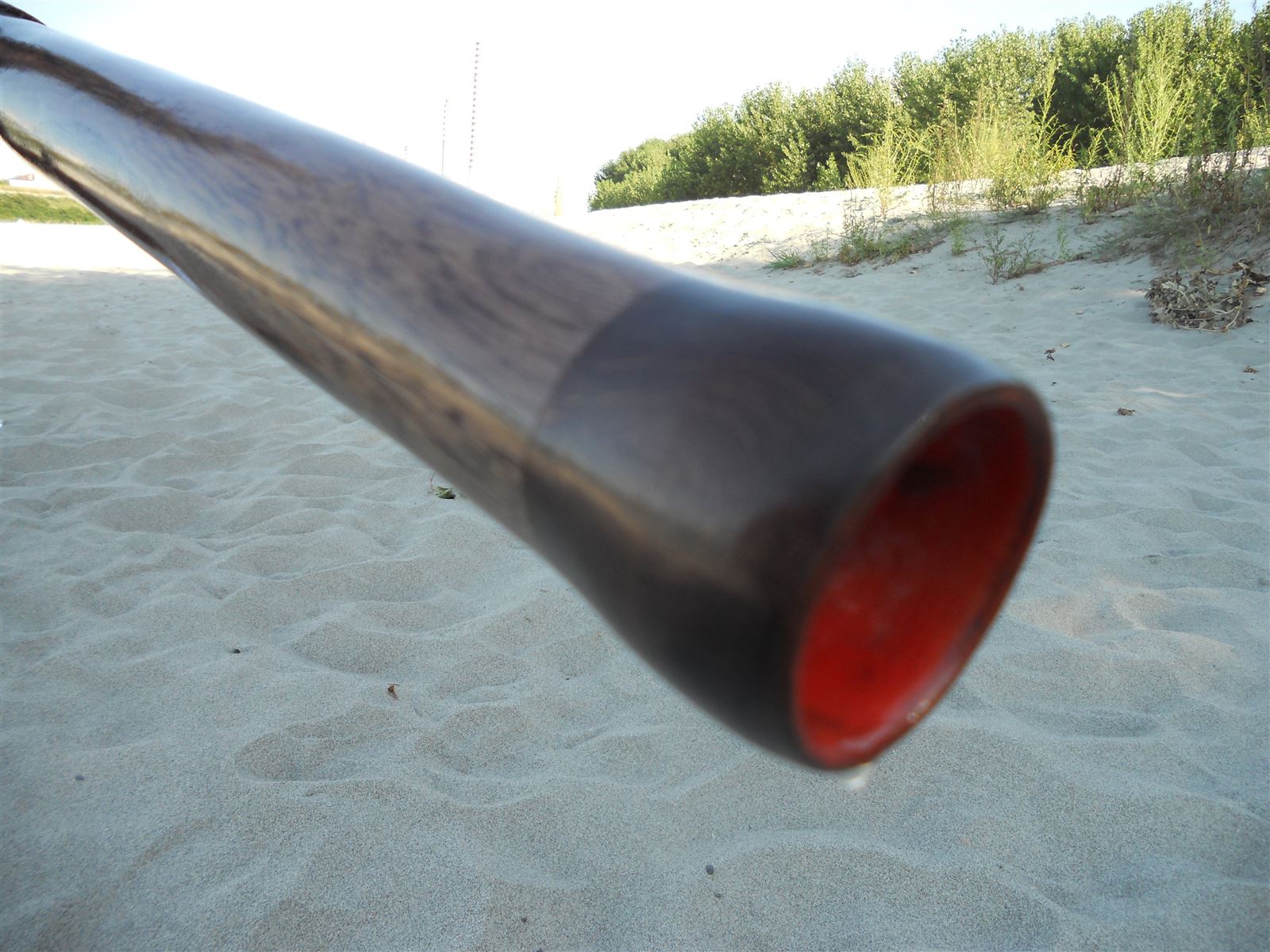
Built for me by Matteo Bellini (Platydoos), it arrived on 22 July 2011. It is made of two pieces joined by a steel coupling and has a separately built bell, carved like the head of a wels catfish (siluro in Italian) and painted red inside: a real “subwoofer” effect. It is the main instrument of my concerts and of my first album.
- Length
- 306 cm (two parts: 156 + 149 cm)
- Wood
- rowan; fir bell; beech mouthpiece (Ø 3.3 cm)
- Main drones
- F 43.6 Hz · G 98 Hz · D 146.8 Hz
- Main toots
- G 98 Hz · D 146.8 Hz · G# 369.9 Hz · C 523.2 Hz
- Maker
- Matteo Bellini (Platydoos), Castel d'Ario (Mantua)
Listen to Siluro
Siluro plays on the first tracks of The Woman The Maker The Master.

Read the full story of Siluro
Siluro entered the didgeridoo world on 22 July 2011, when I collected it from the den of its maker, Master Platydoos. Platydoos knew I wished for a wooden didgeridoo at least 3 metres long and, after the summer of 2010, he started working on it “in secret”.
In March 2011 I went to visit him and the surprise was literally big: a didgeridoo over 3 metres long, the pale yellow of provola cheese, with no visible grain at all. I was amazed and happy to see the object of my desire come true, even if still in the rough. Then a shiver: once finished, how will I ever carry it around? Looking more closely I breathed a sigh of relief: Siluro is made of two “potential instruments” joined by a steel coupling. Platydoos did not have a single 3-metre branch, so he used two already seasoned pieces of wood with shapes suited to being joined. The first part is almost cylindrical and its bell (the male part of the joint) slides into the opening of the second, slightly conical part.
The bell, on the other hand, was unusual in both shape and colour. While working on it, Platydoos was not happy with the volume and, to increase it by boosting the low frequencies, he built a separate bell from fir boards, then glued it to the end of the second piece. About 5 cm from the exit it reaches its maximum internal height, around 22–23 cm, and then narrows again: the exit hole measures 17×14 cm. We have not run any tests, but we believe this shape raised the volume and above all gave the instrument a kind of subwoofer effect.
The first contact was very uncomfortable, especially for my lips. After a few tries I understood why: from March 2010 to March 2011, apart from ordinary instruments, I had played only deep didgeridoos, and I had lost my familiarity with middle ones like Siluro. With an extension, lengthening it to 4.20 metres, I felt in tune with the instrument; but after a short consultation with Platydoos I decided to keep it as it was born. At home I built an instrument from PVC pipes, as similar as possible, to practise while waiting for our next meeting.
On 22 April 2011 I went back to Platydoos to take it home on a one-month trial, but as soon as I played it I knew I had something special in my hands and decided to buy it straight away. The name had to recall something of the Mantua area: given its length and the shape of the bell, I named it “Siluro”, after the wels catfish introduced into our rivers some fifty years ago, and asked for the bell to be carved like the fish's head.
On 22 July I went back to collect the wonderful creature, now in full bloom. The bell portrays the catfish's head superbly, partly thanks to the red-painted inside. Along the whole instrument, under a rosewood-effect varnish, countless grain patterns have appeared, adorning it like natural embroidery. The photos were taken on the bank of the river Po; and by another coincidence, a week earlier I had bought a T-shirt with an Aboriginal depiction of the journey of the fish god, which I wore for the occasion.
The mouthpiece was made separately from beech and then glued on: it is round, with an internal diameter of 3.3 cm and a slight bulge just after the rim, so the lips seal better. The wood is rowan, a member of the rose family. The first part, 156 cm long, is a proper instrument in its own right (drone D 73.4 Hz). The second, 149 cm long including the 36 cm bell, is slightly conical. In total Siluro is 306 cm long; at three key points a hemp cord, painted with the same varnish, was applied to help hold the wood together.
A few lines about Platydoos, officially Matteo Bellini of Castel d'Ario (Mantua). Beyond the care he puts into every detail of his building, he puts even more attention and commitment into his relationships with people: he works without hurry, without looking at the clock and with a contagious calm. Going to take the photos on the Po was his idea. And after more than 9 years of didgeridoo, he helped me understand how unique an instrument is when it comes from a branch gathered on Italian soil and left to season at nature's own pace: you could call it “organic playing”, or “playing only seasonal instruments”.
Treebeard
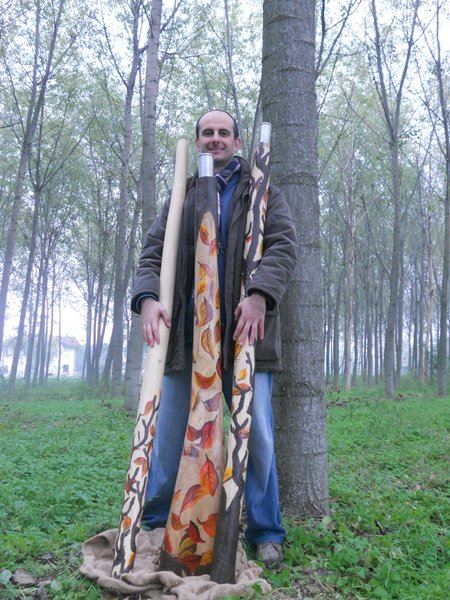
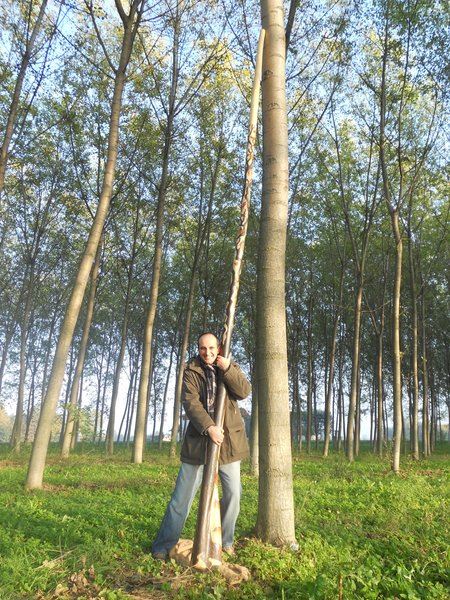
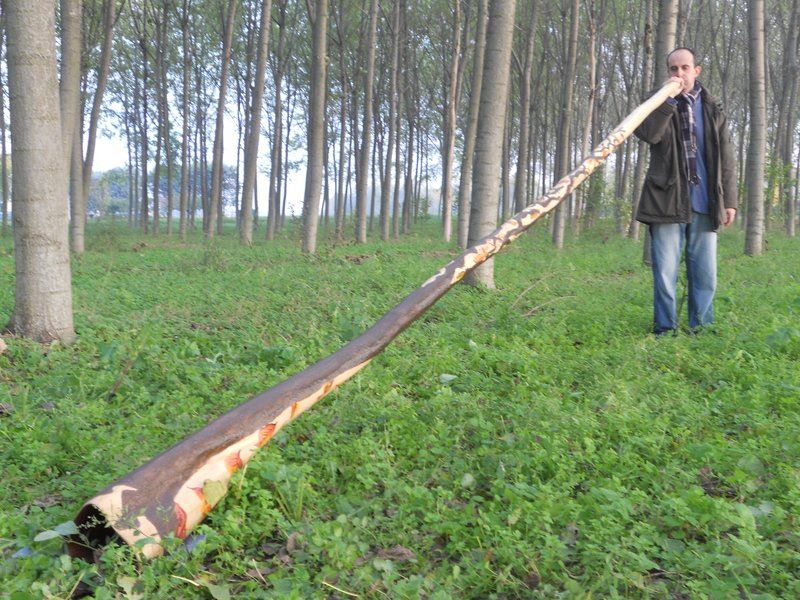
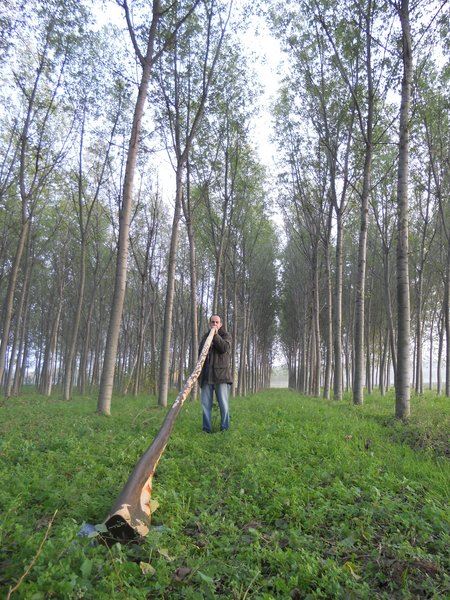
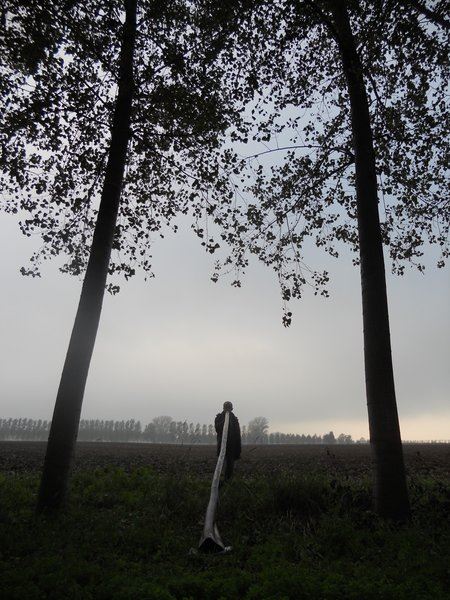
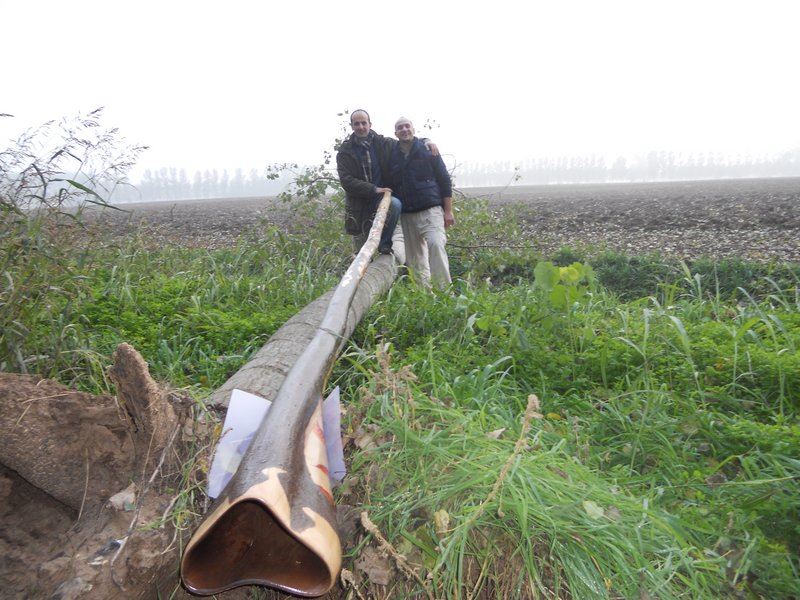
Almost 5 metres of Italian wood and 100% Italian craftsmanship, born from a poplar uprooted by a storm and built once again by Matteo Bellini (Platydoos), with decoration hand-painted by Patrizia. Its drone is an A at 27.5 Hz: the lowest note on the piano. We first met on 2 November 2012.
- Length
- 490 cm, in three parts joined by aluminium connectors
- Wood
- poplar gathered on 5 July 2010 near Sorgà (Verona); bell made of plane-tree boards
- Drone
- A 27.5 Hz
- Makers
- Matteo Bellini (Platydoos), decoration by Patrizia, connectors turned by Franky

Read the full story of Treebeard
I am writing from the desk of the small two-room flat in Via Padova, Milan, where I lived on my own from 2001 to 2008 and where I have temporarily come back while waiting for my new home. I lived here when, in June 2002, a 150 cm PVC pipe came through the door, and I am still here, more than 10 years later, as Treebeard arrives: almost 5 metres of Italian wood. A sign of destiny? I don't know, but it is a beautiful coincidence to find myself in the home where it all began: from a plumbing pipe to a tree-instrument. A shepherd of didgeridoos, to paraphrase “The Lord of the Rings”.
With its arrival I feel I am closing one circle to open another: at last I have all my travelling companions and can explore music without holding back. Both of us were lucky: I, to find in Matteo Bellini a friend and a skilled maker, and above all one willing to embark on an adventure whose starting point was known but whose destination was not; Matteo, to meet someone who wanted to live the journey together with the maker and the instrument. “A lunatic” was his word for it.
The journey begins on 5 July 2010. A “Mantuan coypu” discovers that, in a poplar grove near Sorgà, a violent storm has uprooted several trees (trees, not branches) and rushes to tell Master Bellini. Matteo spends a whole day just loading them, dragging them one by one for more than a hundred metres, and leaves them to season for two years. Treebeard's acorn is planted in 2011, while Siluro is being built: with Siluro we had created a special instrument, but not a deep didgeridoo, which had been our original aim. Perhaps on 22 July 2011, the day Siluro arrives, I choose the tree that will become Treebeard.
The real work starts in April 2012 with the debarking and the making of the bell, built like Siluro's but from plane-tree boards: it is the part that takes the most time and effort, so much so that a tool breaks from heavy use. For reasons of space the instrument has to be split into at least three parts, and when choosing where to cut, it is the tree itself that guides me. The connectors are turned by Franky, Matteo's dad, from aluminium tubes, with a rubber ring on the male ends to prevent air leaks. On 15 September, simulating the first part with a plumbing pipe, we decide it should be between 150 and 190 cm long.
For a whole year I cannot find a name. Then, all of a sudden, a sentence of Matteo's comes back to me: “Dear Jack, it will be like playing a tree.” And there it is: Treebeard (Barbalbero in Italian). Another intuition: asking Patrizia, Matteo's partner, to decorate it. They gladly accept: it is the first time they work together artistically. Matteo creates a tree running the whole length of the instrument with a mixture of glue, wood shavings and sawdust which, once sanded, gives a bark effect; Patrizia draws and hand-paints, one by one, more than 100 leaves.
On 2 November 2012 I arrive in Castel d'Ario and find nobody there: over the phone I receive directions for a treasure hunt. Matteo is waiting for me at the roadside in front of a poplar grove. I walk among the trees on ground still soft from the rain, until in the distance I see, leaning against a tree… another tree. Matteo had chosen as our meeting place the very poplar grove where Treebeard's tree had grown.
I will leave you no other technical specifications beyond its length, 490 cm, and its drone, A at 27.5 Hz. At first I wanted to know everything, note by note, but every time I picked up the tuner it felt like trying to catalogue something wild, proud and free. Treebeard was born to be played and to let you get lost in its depths, with no maps and no theories.
Mago-CH
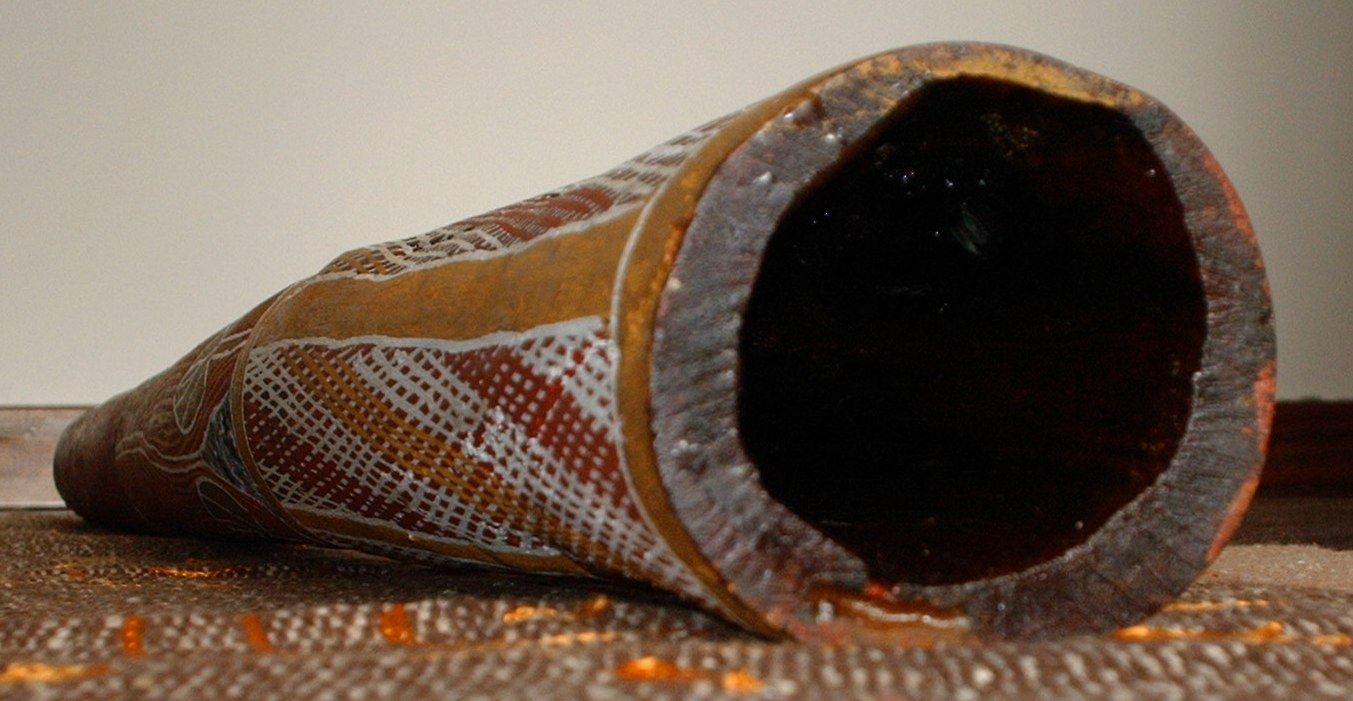
A traditional didgeridoo from West Arnhem Land (WAL), made by Roy Burnyila. I bought it in March 2008 in Zurich from Christian Som, one of Europe's leading experts on traditional didgeridoos. Its strength is its sound: evocative, deep and rich in overtones. And it is light, easy to take anywhere.
- Length
- 130 cm
- Drone
- C#
- First toot
- G / G#
- Mouthpiece
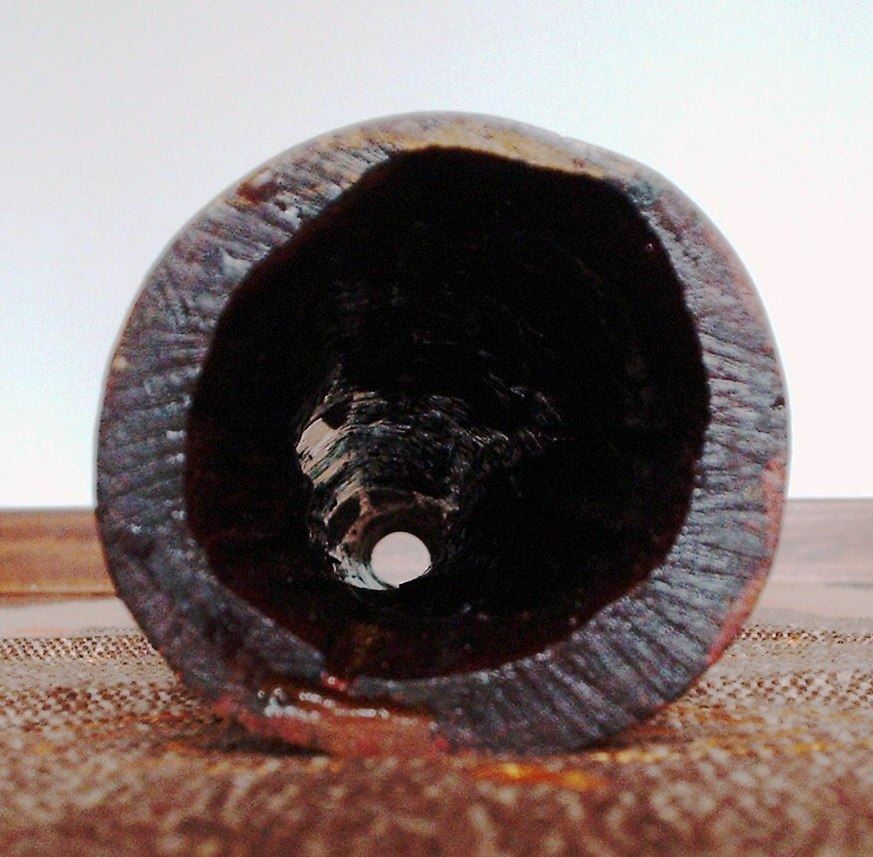
- round, Ø 3.1 cm (no wax)
- Bell
- slightly oval, 6.3 × 5.8 cm
- Maker
- Roy Burnyila


Read the full story of Mago-CH
Bought in March 2008 in Zurich from Christian Som, one of Europe's leading experts on traditional didgeridoos and co-manager, together with John Macdonald, of the Serious Sticks website. It is a traditional WAL (West Arnhem Land) instrument, made by Roy Burnyila.
Its main strengths are its acoustics, its overtones and a truly evocative and deep sound; on top of that it is very light and easy to carry. I have found no real flaws, although the mouthpiece could have been finished better: the outer edges were not rounded off.
Blue Bellini
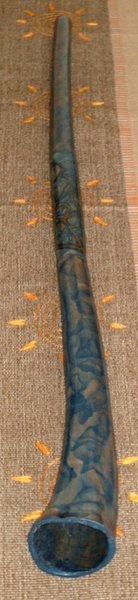
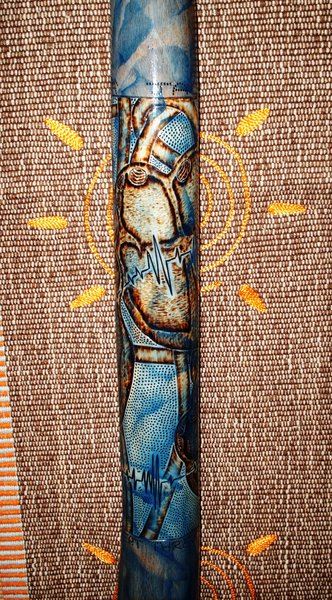
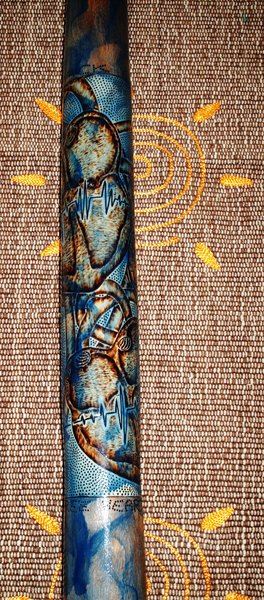
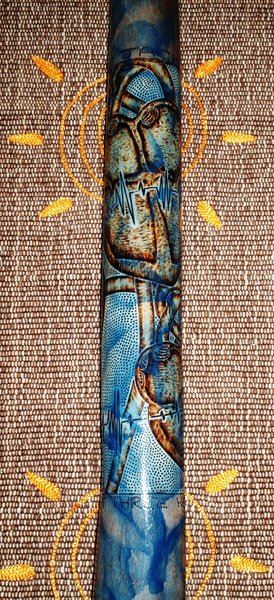
A didgeridoo bought in 2002 that had fallen out of use, “brought back to life” in 2009 by Matteo Bellini like a modern Dr Frankenstein: he cut it in two and grafted in a mini-didgeridoo made of alder, pyrographed with a design inspired by my track Three Hearts One Beat. The drone is deep and dark, yet at the same time clear and strong.
- Length
- 170 cm
- Drone
- C#
- First toot
- F#
- Wood
- Indonesian eucalyptus, with a graft of about 40 cm in Neapolitan alder; walnut mouthpiece
- Mouthpiece
- round, Ø 3 cm (no wax)
- Bell
- irregular, 12.5 × 10 cm (inside measurements)
- Rebirth
- Matteo Bellini (Platydoos), 2 May – 13 June 2009
Read the full story of Blue Bellini
Blue Bellini was born, or rather resurrected, between Sunday 2 May 2009, the day I placed it in the magic hands of Dr Victor von “Bellini” Frankenstein, and Saturday 13 June 2009, when I got the creature back. Matteo Bellini, an artist from Mantua, did to a didgeridoo what Dr Frankenstein did in Mary Shelley's novel.
I had given him a didgeridoo I no longer used, bought in December 2002 at the Milan crafts fair: its basic sound was not good, even the first toot was hard to get, it had little back-pressure and a mouthpiece that was too wide and sharp. The Mantuan master cut it in two (it was Indonesian eucalyptus, hollowed out with a drill) and grafted in a mini-didgeridoo of about 40 cm made of Neapolitan alder. Then he pyrographed a design along the whole graft and painted the instrument.
The design is inspired by my track Three Hearts One Beat: three hearts crossed by a single beat. The beat recalls the lightning that brought Frankenstein's creature to life, and the three hearts are the didgeridoo, the person who plays it and its creator. In this way Master Bellini goes beyond Frankenstein, becoming at once creator and part of the creature, and the new “singing tree” vibrates once more.
As for the sound, Blue Bellini's strengths are its deep fundamental, dark and gloomy yet clear and strong, and its good back-pressure: the first and second toots come out easily. The only thing I am not excited about is the toot itself, which I find too dry and loud; but it is a matter of taste, and I know players who would love it.
Didjeribone
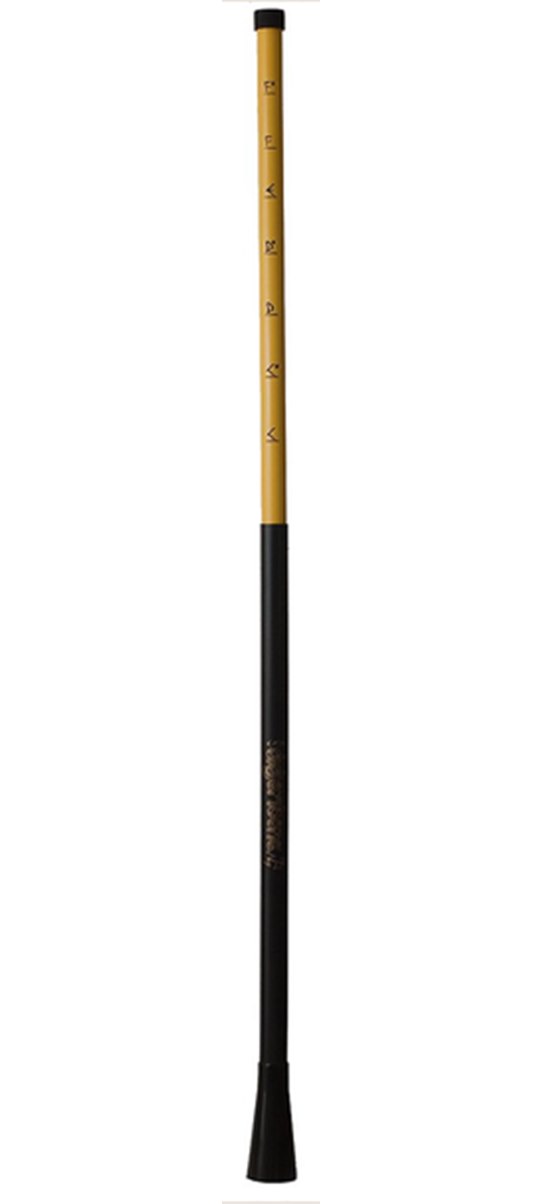
Charlie McMahon's Didjeribone is a very well-known instrument that needs little introduction: two plastic tubes sliding one inside the other, like a slide trombone, so you can change note even while playing.
- Type
- plastic slide didgeridoo
- Key
- from G to A# (11 semitones)
- Bell
- 13 cm
- Mouthpiece
- rubber, round (3 cm)
- Weight
- 462 grams
- Maker
- Charlie McMahon
Charlie McMahon explains how to use the Didjeribone.
Another short presentation: introduction to the Didjeribone on YouTube.
Why I recommend it to beginners too is explained in the article Which didgeridoo should you start with?
Stay tuned
Want to know when a new track comes out? Follow me on Bandcamp: you will get a notification with every release.
Follow me on Bandcamp